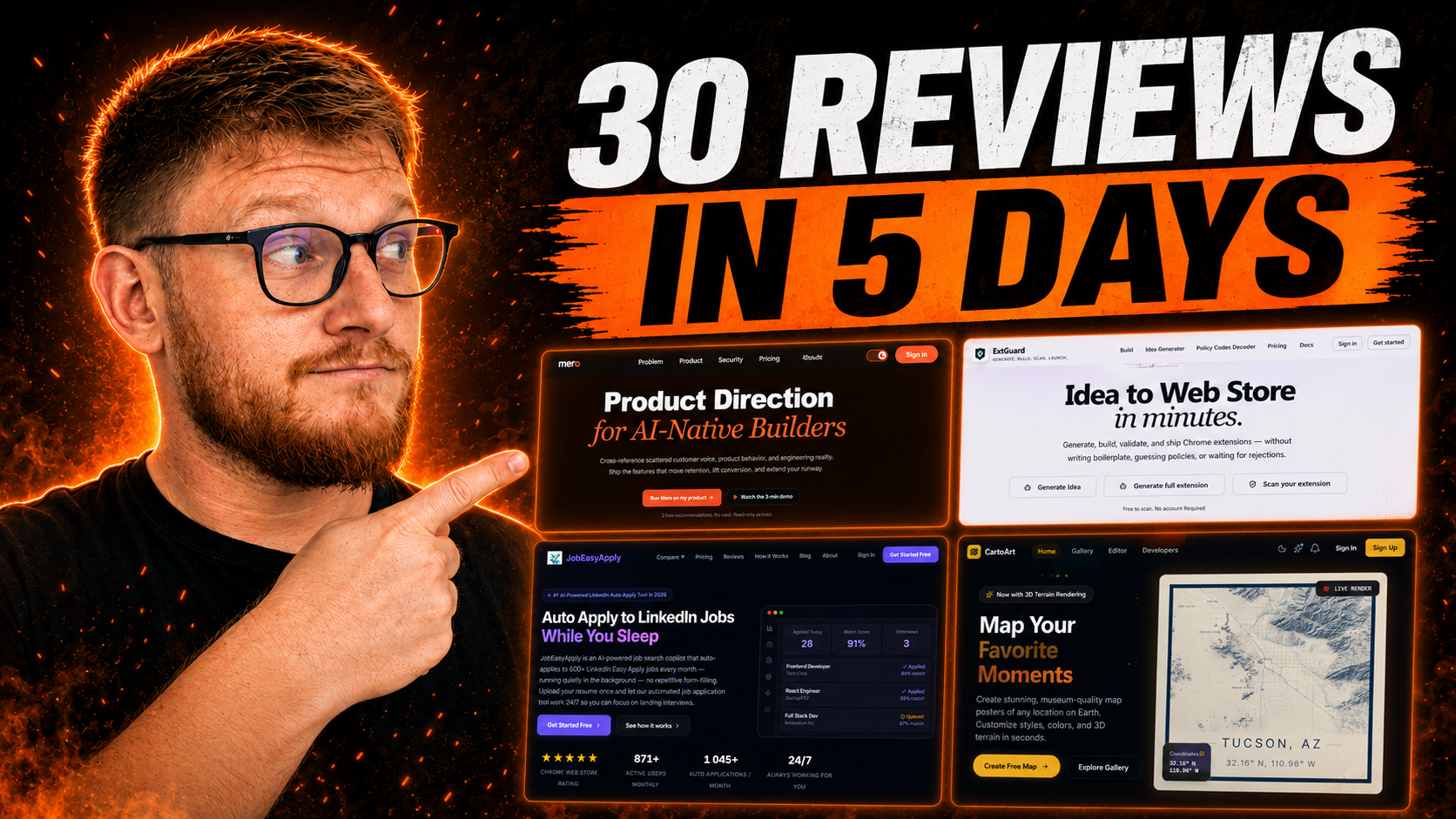
Most websites don’t need more traffic--they need a hero section that stops the right people from bouncing and makes them think “this is about me” in three seconds.
If your hero is vague, clever instead of clear, or packed with options, you’re leaking signups you already paid to acquire.
This guide walks through how to fix that with simple changes you can make in an afternoon.
The one job of your hero section
Your hero has a single job: help the right visitor answer three questions without scrolling:
- Who is this for?
- What problem is this solving?
- What should I do next?
If a visitor can’t answer those questions in a few seconds, they feel lost. When people feel lost, they hit the back button--even if your product is a perfect fit.
A useful stress test: show your hero to someone for three seconds, hide it, and then ask:
- What does this company do?
- Who is it for?
- What would you click next?
If they struggle, your hero isn’t doing its job yet.
Make the problem, solution, and next step stupid‑obvious
The best‑performing hero sections are usually brutally clear, not poetic.
Above the fold, focus on three elements:
- A problem they feel this week, not someday.
- A solution described in simple language.
- A next step that’s easy to understand.
Instead of:
“Innovative AI platform for modern teams.”
Try something like:
“Spending Mondays in spreadsheets? Turn four hours of reporting into a five‑minute summary.”
Notice what this does:
- Names a painful, concrete situation.
- Hints at what the product actually changes.
- Sets up a natural call to action like “Get a demo” or “See a sample report.”
Your supporting subhead and bullets can then add just enough detail: who it’s for, what it replaces, and the main benefit.
Choose one painfully obvious primary call to action
A confused visitor doesn’t convert. If your hero has three or four equal‑weight buttons, people hesitate.
Pick one primary call to action that finishes the sentence: “If this is for you, your next step is to ___.”
Examples:
- “Start free trial”
- “Get pricing in your inbox”
- “Book a 15‑minute demo”
- “Try the live sandbox”
You can still have a subtle secondary action (for example, “Learn more” as a text link), but visually there should be one obvious choice. Think of it as the path you’d recommend to a close friend who just asked, “What should I click?”
Lead with proof, not just promises
Most sites rely on big claims and adjectives. Visitors, meanwhile, are asking, “Who else has gotten results from this?”
Add proof as close to the hero as possible:
- Metrics: “Boosted trial signups by 37%,” “Cut onboarding from 14 days to 3.”
- Specific quotes: “We now close pricing calls in one meeting instead of three.”
- Logos: recognizable clients that match your ideal audience.
- Ratings and reviews: “4.9/5 from 800+ reviews.”
- Visual proof: a short product video, gif, or screenshot that shows the outcome.
- Mini case blurbs: one‑sentence before/after stories.
The key is specificity. “Great tool, highly recommend” feels generic, while “We reduced failed payments by 21% in two months” feels real and testable.
Ask yourself: if a stranger lands on your homepage, can they see someone like them winning with your product before they scroll?
Turn features into outcomes
Features explain what your product does. Outcomes explain why that matters.
Anytime you list a feature, try to complete the sentence: “so that you can…”
- “Automated email sequences, so you can follow up with every lead without manual work.”
- “Centralized project view, so you can see what’s blocked in seconds.”
You can also frame outcomes as before/after snapshots:
- “Onboarding shrank from 14 days to 3.”
- “Signups went from 9% to 18% in six weeks.”
If you can’t put your product into a simple before/after sentence, the value is probably not clear enough yet.
A simple checklist for your hero
Use this quick checklist on your own homepage:
- Can a new visitor understand what you do in three seconds?
- Can they tell if it’s meant for someone like them?
- Is the main problem you solve obvious in plain language?
- Is there one primary, crystal‑clear call to action?
- Can they see real proof (metrics, logos, quotes, or a tiny video) without scrolling?
If you can honestly answer “yes” to all of these, you’re ahead of most sites in your space.
- Carrot hero A/B test (22–46% more signups):
https://carrot.com/blog/hero-section-conversion-test/ - Hero section best practices and examples (clarity, above‑the‑fold focus):
https://www.omniconvert.com/blog/hero-section-examples/ - General CRO and conversion‑lift case studies (shows impact of clarity, proof, CTAs):
https://unbounce.com/conversion-rate-optimization/cro-case-studies/
https://www.conversionflow.com/cro-case-studies - CRO fundamentals and the role of value proposition and proof:
https://vwo.com/conversion-rate-optimization/ - Clarity and usability emphasis in web design (supports the “3‑second understanding” idea):
https://www.fraem-creatives.com/blog/clarity-over-creativity-in-web-design-why-usability-wins
Any statistics cited in this post come from third‑party studies and industry reports conducted under their own methodologies. They are intended to be directional, not guarantees of performance. Real outcomes will depend on your specific market and execution.
How long should my hero headline be?
Aim for a short, clear sentence or two lines at most. If someone has to reread it to understand what you do, it is too long or too vague.
Do I always need numbers in my hero?
No, but concrete numbers often make your promise more believable. If you have real metrics (conversion lifts, time saved, revenue impact), use them. If not, lean on a specific problem and outcome instead of big, fuzzy claims.
What if I have multiple audiences or offers?
Pick a primary audience for your homepage hero and speak directly to them. You can still route others with secondary navigation or segmented calls to action, but trying to talk to everyone at once usually makes the hero too generic.
Where should I put social proof--hero or lower on the page?
Ideally, both. Include at least one strong proof element above the fold (logos, rating, or a short quote), then go deeper with full testimonials and case studies further down the page.
How often should I update my hero section?
Review it whenever your product, positioning, or ideal customer changes, and any time your metrics suggest a drop in engagement or signups. Even small tweaks--like clarifying the problem statement or tightening the call to action--can have an outsized impact.