
Updated November 2026: added Framer's new Automations, Connectors and Slack app, Webflow pausing App Gen, Webflow's Team plan credits and Bolt's new 3-collaborator cap on free projects.
For a startup marketing site, use Webflow or Framer once the site needs a CMS and people other than the founder edit it, and use Lovable, v0 or Bolt for the product and for a first page you expect to replace.
Webflow suits content-heavy sites and teams that want to build and edit with Claude through the MCP. Framer suits a small site a designer wants to ship fast.
I design in Figma and build client sites in Webflow, so I'm not neutral. Everything about Framer, Lovable, v0 and Bolt below comes from their own pricing pages and docs, and every price is as of November 2026.
The short answer, by situation
The right builder for a startup site depends on who edits it and how much content it holds. This is the call I'd make for each situation founders bring me.
| Your situation | Use | Why |
|---|---|---|
| Waitlist or one-page launch, only you edit it | Lovable, v0 or Bolt | Fastest to live, cheapest, and you'll replace it anyway |
| The product is the site, logins and data included | Lovable, v0 or Bolt | Webflow and Framer host marketing sites, not apps |
| Small marketing site, a designer owns it, light content | Framer | Fast to design in, cheap Basic plan, built-in A/B testing add-on |
| Blog, case studies or a changelog that grow every week | Webflow | 20,000 CMS items on Premium and a content editor seat |
| You want Claude to build and edit the site with you | Webflow | Official MCP server on every plan, with roles and logs |
| Several markets and languages | Webflow or Framer | Both sell localization add-ons |
What each builder is for
The five builders split into two groups. Webflow and Framer are visual website builders with a CMS and hosting. Lovable, v0 and Bolt are AI app builders that write code from a prompt.
Webflow
Webflow is a visual builder that writes clean HTML and CSS, with a CMS, hosting and roles for teams. It's built for marketing sites that grow: a blog, case studies, landing pages for campaigns. Its MCP server lets Claude, ChatGPT, Gemini, Copilot and Cursor work on a site directly.
Framer
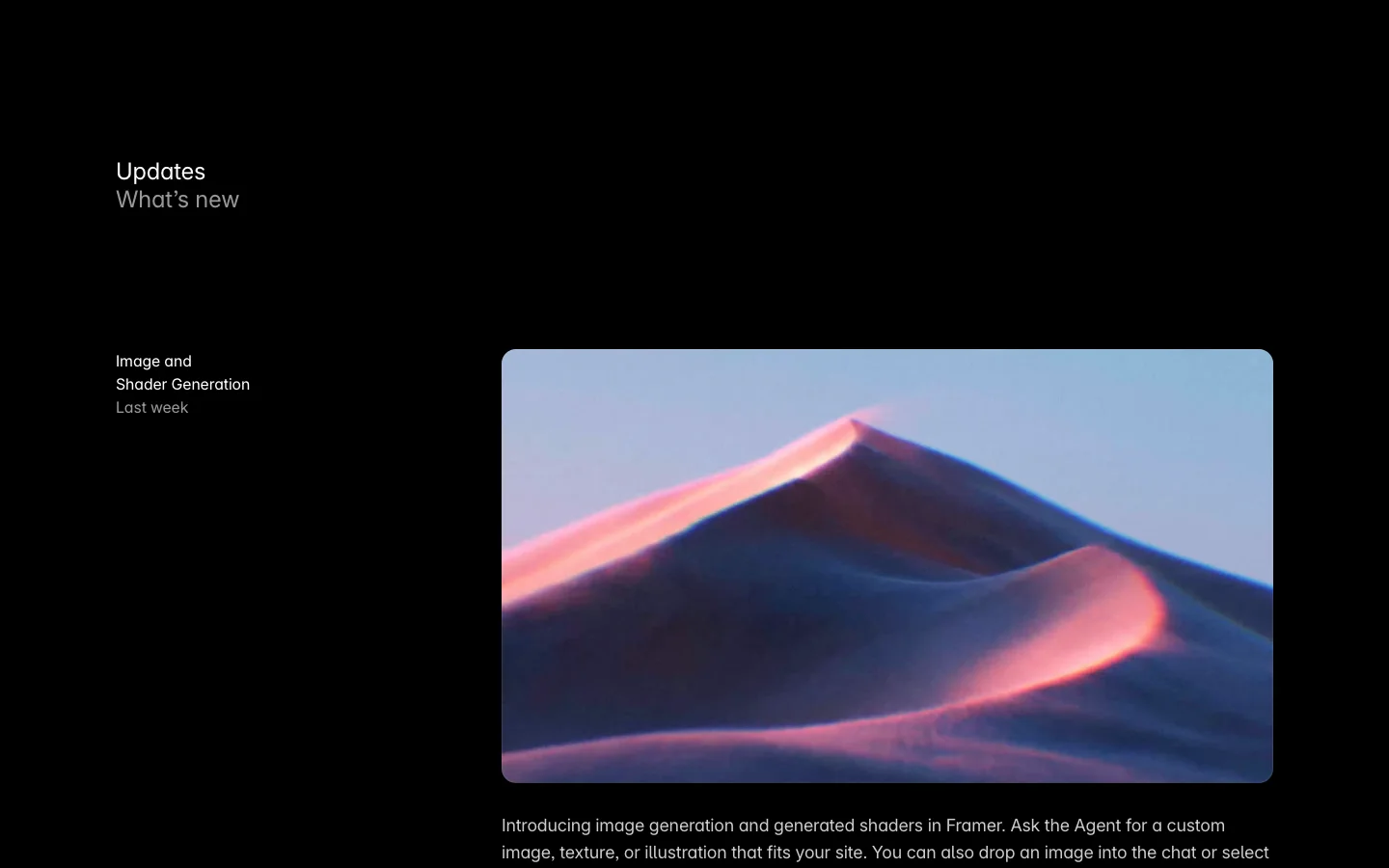
Framer is a visual builder that grew out of a prototyping tool, so it's quick for designers who think in layouts. It has a CMS, localization and an A/B testing add-on, and its AI Agents design, write and localize on the canvas. Framer rebuilt its Agent on November 2, 2026 and added image and shader generation on November 12, per Framer's updates page.
Lovable, v0 and Bolt
Lovable, v0 and Bolt turn a prompt into a working React app. They're built for products: logins, databases, payments. A marketing site is one thing they can make, and they make it in an afternoon. They don't have a CMS for blog posts, and every edit is a code change, which is the root of most problems founders bring me later.
What each builder costs
The builders cost roughly the same at the entry level and split apart once you add a CMS, editors and add-ons. Prices below are per month as of November 2026.
| Builder | Entry plan with a custom domain | Plan most startups need | Extra people |
|---|---|---|---|
| Webflow | Basic, $15 billed yearly or $25 monthly, no CMS | Premium, $25 billed yearly or $39 monthly | Full seat $39, limited content seat $15, both billed yearly. Reviewers free. |
| Framer | Basic, $10 on yearly billing | Pro, $30 on yearly billing | Editor $20, content editor $10 |
| Lovable | Pro, $25 for 100 credits, or $250 a year | Pro or Business at $50 | Unlimited members on every plan |
| v0 | Plus, $30 per user | Plus, plus Vercel Pro hosting at $20 per developer seat | $30 per user on Plus |
| Bolt | Pro, $25 with 10M tokens | Pro or Teams | Teams, $30 per member |
Sources: Webflow, Framer, Lovable, v0, Vercel, Bolt.
Three costs catch founders out:
- Vercel's free plan is for non-commercial use. Vercel's terms limit Hobby to personal or non-commercial projects, so a startup's v0 site belongs on Pro at $20 a month or more.
- AI builders charge for edits. Lovable gives 100 free inline text edits in any 24 hours, then edits use credits. Style changes go through a prompt and always use credits.
- Webflow and Framer charge for add-ons. Webflow's A/B testing add-on starts at $299 a month. Framer's Convert add-on costs $50 per 500,000 events on Pro.
CMS and content
Webflow has the largest CMS of the five, and the AI builders have none. That one difference decides most startup sites, because a site that publishes every week needs a place for posts that isn't the code.
- Webflow Premium: 20,000 CMS items and 40 collections. Each item gets its own SEO title, description and URL.
- Framer: 2 collections and 1,000 items on Basic. Pro has 10 collections and 2,500 items, expandable to 40 collections and 40,000 items at extra cost.
- Lovable, v0 and Bolt: none of their docs describe a CMS. When Lovable imports a site, blog posts come in as fixed page text.
If you publish less than once a month and have under 20 pages, any of the five works. Past that, you want a real CMS.
Design quality and the sameness problem
Design quality depends on who designs the site, and AI builders make the same few designs by default. An October 2026 benchmark, Design Creativity Bench, scored AI models at 0.581 on creative range against 0.902 for human designers.
Webflow and Framer don't fix that on their own. Their templates converge too, and Framer's Agent can generate a layout as fast as Lovable can. What they give you is a canvas where a designer controls every pixel and the result stays editable. In Lovable, v0 or Bolt, the designer's work turns into code that the next prompt can undo.
So the honest comparison is this: on Webflow or Framer, the design is as good as the person who made it. On an AI builder, it drifts toward the average unless someone fights it on every prompt.
SEO and AI search
Webflow and Framer publish pages as HTML that search engines and AI crawlers read without running JavaScript. That matters because Vercel and MERJ found none of the major AI crawlers, including GPTBot and ClaudeBot, run JavaScript.
The AI builders have caught up on rendering. Lovable's docs say apps created from May 13, 2026 render on the server, and older ones serve pre-rendered pages to verified crawlers. The same page says Lovable doesn't always make a sitemap and that starting metadata is generic. v0 sites run on Vercel, usually with Next.js, which can render on the server if it's set up that way.
The gap that's left is content. AI search cites pages that answer questions, and pages like that come from a blog or a help center, which brings you back to the CMS. I checked what AI search sees on my own Webflow site in an AI search audit of humbldesign.io.
Who can edit the site
Webflow and Framer have seats for people who edit content and nothing else. The AI builders give everyone the same access to the code.
- Webflow: a limited seat at $15 a month billed yearly holds the Content editor role, which edits text, images, links, CMS items and page SEO and can't touch styles or structure, per Webflow University.
- Framer: a content editor at $10 a month manages CMS content, localization and on-page edits, per Framer's help center. Framer's official Slack app, launched November 24, 2026, also lets your team ask about the site and make edits from Slack.
- Lovable, v0 and Bolt: inline text edits in the preview, and everything else through prompts. Bolt's visual edits use tokens when you save. v0's Design Mode changes text and styles, then you click Apply. Bolt's Free plan caps each project at 3 collaborators since mid-November 2026, per its release notes.
AI features in each builder
All five builders use AI now. The difference is whether the AI writes your site from scratch or works inside a site a person designed.
- Webflow: the official MCP server is free on every plan. Claude can fill the CMS, build sections from a description, create GSAP-based interactions and publish, and it can only do what your Webflow role allows. Webflow's own AI credits come with the workspace: 200 a month on Starter, 300 on Core, 400 on Growth and 100,000 a year on Team. Webflow has paused App Gen, its full-stack app generator, and started deprecating it in favour of AI code components.
- Framer: AI Agents work on the canvas using credits, 1,000 a month on Basic and 3,000 on Pro. External agents like Claude connect through Framer's MCP server without using Framer credits, and the MCP server is free while in preview. Since November 24, 2026, Framer also runs Automations, agent jobs triggered by a schedule, a publish or a form submission, with 1 on Free, 3 on Basic and 10 on Pro, plus Connectors for Slack, Notion and Ahrefs.
- Lovable, v0 and Bolt: the AI is the builder. You prompt, it writes code, you pay in credits or tokens.
I build with the Webflow MCP every week. The workflow, from Figma to the CMS, is in how I design and build a Webflow site with Claude.
Localization and A/B testing
Webflow and Framer both sell localization and A/B testing as add-ons, and Framer's are cheaper to start.
| Add-on | Webflow | Framer |
|---|---|---|
| Localization | Localize, $9 per locale on the entry tier for 1 to 3 locales, or $29 per locale for up to 10 | 1 locale free, then $20 per locale, up to 20 |
| A/B testing | A/B testing add-on, from $299 a month | Convert, $50 per 500,000 events on Pro |
For a seed-stage startup, A/B testing rarely pays off before you have steady traffic. Fix the page first, then test.
Security
Webflow and Framer host static marketing pages with no database you manage, so the common vibe-coding leaks don't apply to them. The AI builders make full apps, and full apps can leak.
A 2025 scan by researcher Matt Palmer found exposed databases in 170 of 1,645 Lovable apps. Lovable now runs a security review before publishing and, since November 18, 2026, can block publishing on a critical finding if that setting is on. If your marketing site lives inside your app, the site shares the app's risk.
Moving between builders
Moving between these builders means rebuilding the pages. Lovable, v0 and Bolt sync code to GitHub, but Webflow and Framer can't import a React app, so the content moves by hand or with Claude.
The traffic goes both ways. Since October 29, 2026, Lovable's changelog says it can import an existing Webflow, Wix or Squarespace site from its URL. It's a one-time copy of the pages, and the CMS doesn't come with it.
If you're starting on an AI builder, keep the marketing pages separate from the app from day one. The later move is then a few pages and a domain change.
My pick for a seed-stage startup
I'd launch the product in whatever AI builder gets it working, and put the marketing site in Webflow the moment it needs a blog or a second editor. Webflow costs a little more than Framer, and for that you get the biggest CMS, a content editor seat and an MCP that lets Claude do the CMS work while a person keeps the design.
If your site is 5 pages, rarely changes and your designer lives in Framer, Framer is a good choice and I'd tell you so. Before you build on either, set the site up properly: how to set up a Webflow project covers the plan, class naming, style guide and CMS order.
Count the pages you'll publish in the next 6 months. Under 20 and any builder works. Over 20, choose the one with the CMS your team can edit without you.
Any statistics cited in this post come from third‑party studies and industry reports conducted under their own methodologies. They are intended to be directional, not guarantees of performance. Real outcomes will depend on your specific market and execution.

Is Webflow or Framer better for a startup website?
Webflow is better for a startup site that publishes a lot or has several editors, because Premium holds 20,000 CMS items and a content editor seat costs $15 a month billed yearly. Framer is better for a small site a designer owns, with Basic at $10 a month on yearly billing.
Can I build my startup's marketing site in Lovable?
Yes, and it's a fine way to launch. Lovable is built for apps, though, and its docs describe no CMS, so a blog or case studies become code changes. Once the site needs weekly content or a second editor, move the marketing pages to Webflow or Framer and keep the app in Lovable.
Is the v0 free plan enough to host a startup site?
No. v0 deploys to Vercel, and Vercel's terms limit the free Hobby plan to personal or non-commercial use. A startup's site belongs on Vercel Pro, $20 a month per developer seat as of November 2026, on top of v0's own plan.
Which website builder is best for SEO and AI search?
Webflow and Framer both publish HTML that search engines and AI crawlers read without running JavaScript, and both have a CMS for the content AI search cites. Lovable apps created since May 13, 2026 render on the server too, but Lovable has no CMS for blog posts.
Can Claude build a site in Webflow or Framer?
Yes, both. Webflow's official MCP server is free on every plan and lets Claude fill the CMS, build sections and publish within your Webflow role. Framer's MCP server lets external agents like Claude work on a Framer site and is free while in preview as of November 2026.